

Nelt Careers Portal
karijera.nelt.comClient: Nelt Group
Project Type: Careers Portal
Engagement Model: Technology Partner
Location: Belgrade, Serbia
Services: UX & UI Design, Web Development, Quality Assurance, Maintenance
Nelt Group is one of the leading FMCG distributors in the region, with over 30 years of market presence.
Challenge:
A company of this size and geographic reach had no centralized digital space where candidates could understand the culture, values, and opportunities Nelt offers in a way that felt localized and relevant to each market. Job listings existed, but the context that makes them compelling - who we are, how we work, what you get - wasn't clearly communicated or consistently presented.
Our Solution:
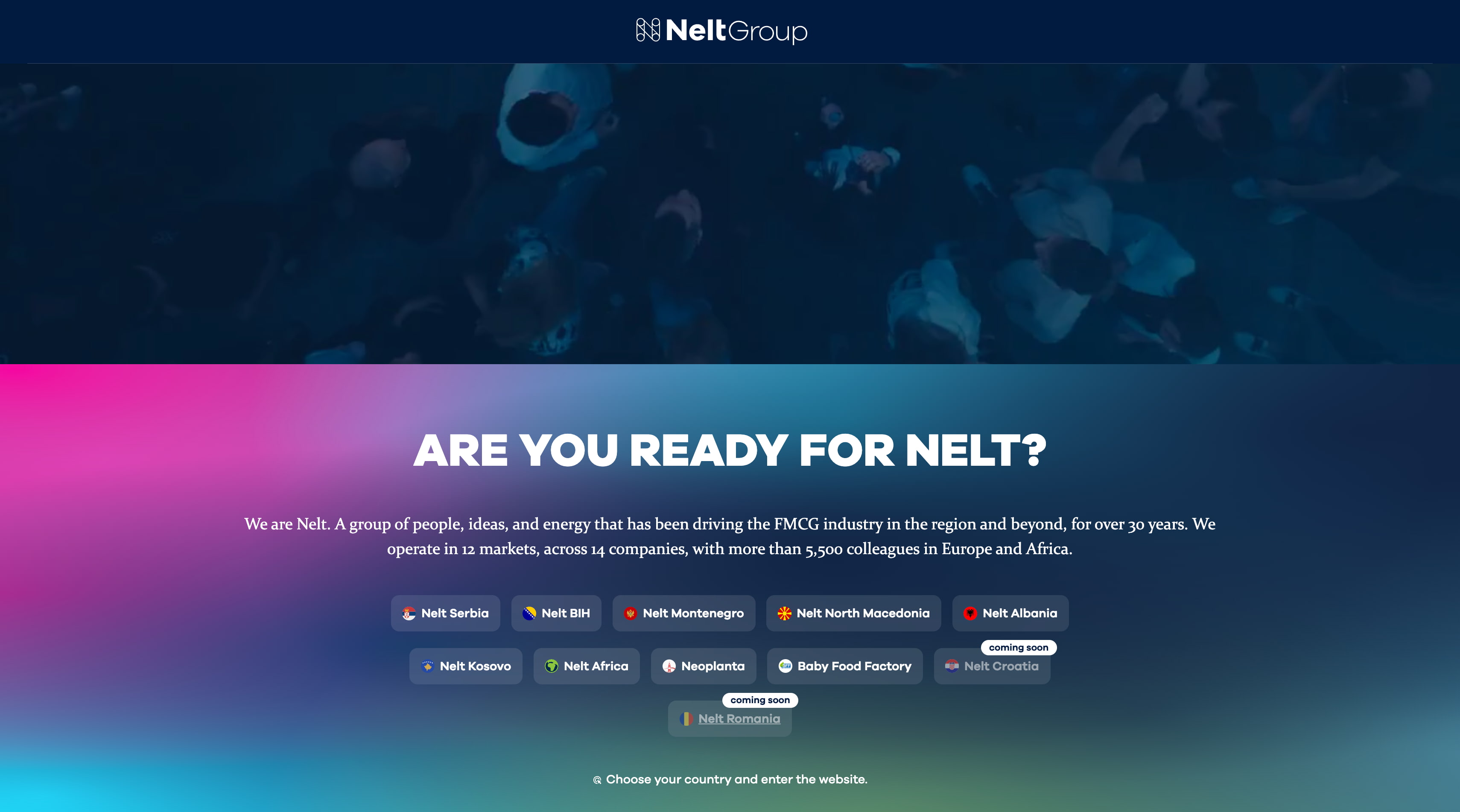
We designed and developed karijera.nelt.com. A multilingual, multi-market employer branding portal that functions as a global entry point, branching into country- and language-specific instances.
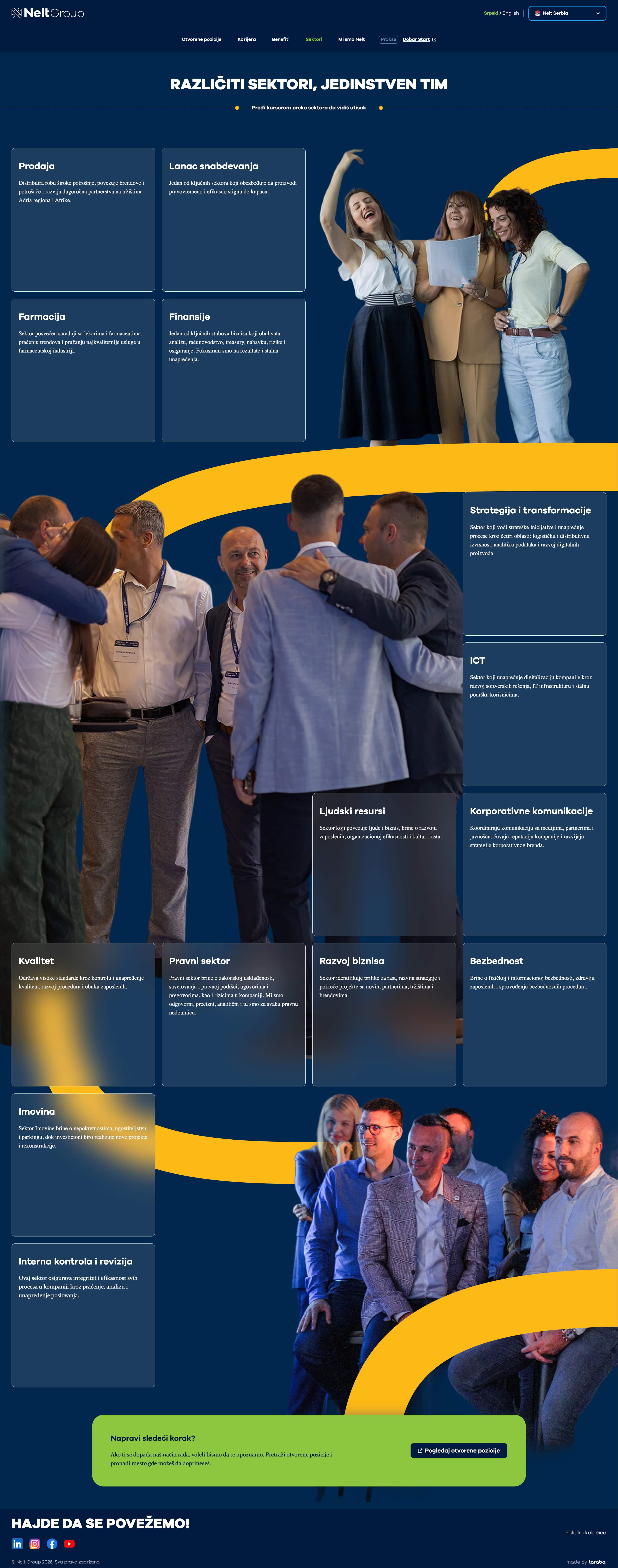
The site architecture operates on two levels. A global landing page introduces the group and routes visitors to their relevant market. Each market then has its own instance with a consistent page structure: open positions, career path, benefits, sectors, and company culture.
The portal currently covers 11 entities:
Nelt Serbia, Bosnia & Herzegovina, Montenegro, North Macedonia, Albania, Kosovo, Croatia, Romania
Nelt Africa
Neoplanta
Baby Food Factory
Languages include Serbian, English, Bosnian, Macedonian, Albanian, Croatian, and Romanian - with a dual-language option within select markets (e.g. Serbia: Serbian / English).
Collaborating with the Nelt team was straightforward in the best sense of the word. They came with a clear need but remained genuinely open to how we shaped the solution which gave us the space to make meaningful design decisions rather than just execute a brief.
The process involved multiple rounds of iteration and alignment, which was expected given the complexity of the project: multiple markets, multiple languages, multiple stakeholders across different countries. What made it work was that feedback came quickly and decisively. There was always a clear point of contact on their side, which kept the momentum going and prevented the kind of back-and-forth that tends to slow projects like this down.
They pushed back when something didn't feel right for their context, and we pushed back when a suggestion would compromise the experience. That mutual respect for each other's domain - theirs being the organization and culture, ours being design and architecture - made the collaboration genuinely productive.
The end result reflects both sides of that equation.